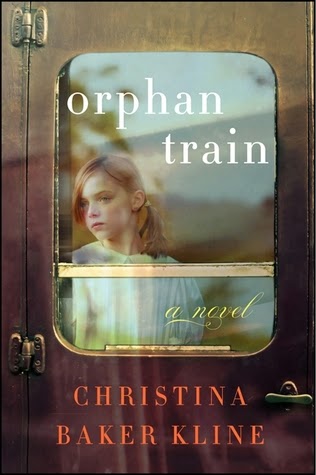
Orphan Train by Christina Baker Kline made its rounds on
book club lists and “Best Of” lists in 2014. I am clearly late to the party.
The story follows Molly, a Native American foster teen who needs to do
community service for stealing a library book. Her service involves helping 91-year-old
Vivian clean out her attic. And in cleaning the attic, Molly learns about
Vivian’s experience as part of the Orphan Train program in the 1920s. Together,
the two women consider the burdens they carry and how stories connect them to
the past and to each other.
As I began this review, I thought that I would be revisiting
the issue of the portrayal of older characters in novels. But this is not
really a book about an older character and a younger one; instead, it’s a book
about two girls growing up in different eras. Not only that, there is a gloss
of romance, a whole bag full of coincidences that pull characters together,
somewhat one dimensional adult authority figures that make the reader root for
the kids, etc. This book had all the hallmarks of a Young Adult novel, but it
is not being marketed that way.
Had I known that this was a good book for younger readers**,
I would have approached it as such and raved about it. It was so accessible, and I devoured it in one
sitting! But I do feel a bit misled, as I was expecting something more raw and
complicated. I do not mean to step into the steaming heap of last summer’s literary ruckus about whether or not YA literature is valuable for adult readers.
I am trying to be a reader who tackles a broad array of books, and YA will be
part of that array. But I do read kids’
books with a different eye and a different spirit. I always ask myself if the
14-year-old version of me would have enjoyed the book. Would it have resonated with
my experience or taught me something new?
All that said, this book does what good historical fiction
can do: it pushes the reader to think about enduring themes in a different time
and place. The Orphan Train program, which transported homeless children
without parents away from east coast cities and relocated them with families in
the Midwest, was the predecessor of the modern foster care system. The book’s
appendices direct you to a collection of resources to find out more about the
stories and experiences of Orphan Train participants (victims?). I can easily
see this novel being integrated into a U.S. History class as a springboard to a
larger conversation about immigration or urbanization.
You can find out about the Orphan Train program here. And you
can learn more about this author here and here.
**Note for parents: high school level due to a scene of
sexual violence

